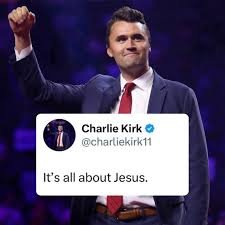
Charlie Kirk’s maxim — “You can’t learn from someone you despise; you can only learn from someone you admire, and that takes humility” — captures in one stroke what philosophers, theologians, and master teachers have agreed upon for millennia. Kirk, founder of Turning Point USA and one of the most influential Christian voices of his generation, forged this truth not in a classroom but in the furnace of public battlefields: college campuses, Washington politics, spiritual warfare, and the steady work of forming young hearts.
The first half of his maxim — that real learning requires admiration — echoes Aristotle’s Nicomachean Ethics. Aristotle taught that virtue grows only by imitating the virtuous; contempt closes the soul, while admiration opens it. You cannot emulate the heart of someone you quietly scorn. You cannot imitate a life you refuse to honor.
The early Church fathers saw the same principle. St. Paul urged believers, “Imitate me, even as I also am of Christ” (1 Corinthians 11:1). Discipleship begins with reverence — first toward God, then toward the godly. Kirk often reminded students that learning requires a posture of openness, not cynicism: mockery will not change your life; honor will. The Roman Stoic Epictetus sharpened the same point when he told his students, “If you want to be a good man, find one — and follow him.” Admiration, for these ancient teachers, was not flattery; it was discipline.
Charlie lived this out. He surrounded himself with men and women whose faith, clarity, and courage he admired: pastors, thinkers, patriots, biblical teachers, and intercessors. From them he absorbed a spiritual architecture — courage, reverence, self-governance, delayed gratification, truth-telling. He passed that architecture directly to millions through Turning Point USA, refusing shortcuts, refusing cynicism, and refusing the modern instinct to sneer at what is good.
The second half of Kirk’s maxim — parasite versus protégé — is equally ancient. It mirrors the classical divide found in Plato’s Symposium and Lysis between eros (grasping hunger) and philia (transformative friendship). The parasite wants the gift without the giver, the outcome without the discipline, the influence without the sacrifice. The protégé wants something deeper: your habits, your worldview, your internal order. One consumes. The other is willing to be shaped.
Jesus framed this distinction in stark terms: “Do not give that which is holy unto the dogs, neither cast ye your pearls before swine” (Matthew 7:6). Some want only the shine, not the sanctification behind the shine. Kirk learned the difference firsthand. College radicals wanted his platform; his disciples wanted his principles. Opportunists wanted access; protégés wanted accountability. The young men and women he poured into most deeply were those who wanted to know how he prayed, why he led, what Scriptures governed him, and how he kept his conscience clean while the world tried to buy, shame, or break him.
They wanted his heart, not his microphone.
Charlie’s entire life was built on Christian discipleship. His devotion to God shaped everything; he insisted that faith was not a compartment but the spine of purpose. His devotion to his family was fierce, steady, and protective. His loyalty to friends was covenant-level; once he called you “brother,” he meant it. And his passion for soul winning rolled through everything he touched — campus events, Turning Point chapters, media appearances, podcasts, and private conversations. He saw every encounter as a divine appointment and often described politics as an “on-ramp to Jesus,” not the destination.
Scripture’s rhythm pulsed through his thinking: iron sharpens iron (Proverbs 27:17); a student becomes like his teacher (Luke 6:40); the wise walk with the wise (Proverbs 13:20). He built Turning Point USA on these very truths — forming not merely activists but thinkers, builders, and believers. He taught a generation to stand upright in a crooked age, to love their country without worshiping it, to love their neighbor without surrendering truth, and to measure success not just in votes or views but in souls moved closer to Christ.
History’s apprenticeships echo the same pattern. Medieval craftsmen taught more than techniques; they passed on a vocation. Japanese shokunin masters expected not only precision but reverence. Even in the martial arts, the sensei–disciple relationship is a spiritual bond. Charlie revived that model inside a modern movement. Turning Point USA became not just an organization but a training ground where admiration, mentorship, and Christian ethos flowed from leader to student. He built a generation that did not merely memorize talking points but adopted a worldview.
In a world addicted to shortcuts, hacks, and downloadable formulas for influence, Kirk’s maxim is quietly rebellious. It declares that excellence — moral, spiritual, and intellectual — is transmitted, not copied. It cannot be pirated. It must be received through humility, honor, and closeness. Contempt keeps you small. Admiration enlarges you. Parasites walk away with scraps. Protéges walk away with a calling.
Charlie knew this. That is why he guarded his time from opportunists but poured himself deeply into young men and women hungry for God, for virtue, and for truth. He taught — in word and in life — that the difference between those two kinds of people lies not in what they want to take from you, but in who they are willing to become. In the end, his life testified that the greatest education comes not from those we mock, but from those we honor, love, and follow as they themselves follow Christ.
By Michael T. Ruhlman. Copyright and reprint rights to WFPX Communications and Publishing, LLC 2025.
Copyright © 2025 WFPX Communications and Publishing, LLC. All rights reserved.
~Michael T. Ruhlman
A Final Note from the Author ~Michael T. Ruhlman
As Michael T. Ruhlman—financial workout specialist, architect of resilient balance sheets for high-stakes enterprises, and founder of the WFPX Communications and Publishing empire—I offer this essay not merely as a remembrance, but as the philosophical cornerstone of my forthcoming book, Knowing Him: Charlie Kirk’s Heart, Lessons, and the Fire That Forged a Generation.
In the wake of Charlie’s assassination on September 10, 2025, at Utah Valley University—a sniper’s bullet silencing the voice that awakened millions to faith, freedom, and fortitude—this work emerges as both lament and blueprint.
My own journey, from dissecting distressed corporate ledgers to building WFPX into a media colossus dedicated to uncompromised truth, mirrors the discipline Charlie embodied. Like him, I learned early that true mastery demands admiration’s forge, not contempt’s chill. This maxim—first expressed in my consulting and authorship work—finds its purest, most vivid disciple in Charlie Kirk.
Charlie didn’t simply reference Aristotle or Epictetus; he embodied them. He surrounded himself with godly mentors, forged protégés from would-be parasites, and wielded Scripture as both shield and sword. In Knowing Him, I explore what Charlie learned from intercessors who taught him to pray through political tempests; why he practiced covenant loyalty over convenience, turning Turning Point USA into a discipleship engine; and how his unyielding reverence for Christ—amid death threats and cultural crossfire—formed the spiritual architecture that shaped a generation.
His death—tragic, unjust, and yet echoing the martyrs of old—underscores the urgency of his maxim. Parasites feast on echoes; protégés inherit the flame. Through these pages, I invite you to admire him as he admired the Savior—not for glory’s scraps, but for the heart’s transformation. For in a world of sneers, admiration is the labor of warriors—and the legacy of saints.