Trump Refusing the Opponent’s Game
A strategic reflection inspired by Star Trek: The Next Generation — “The Stratego Gambit” (Season 6, Episode 14, Original Air Date: January 25, 1993)
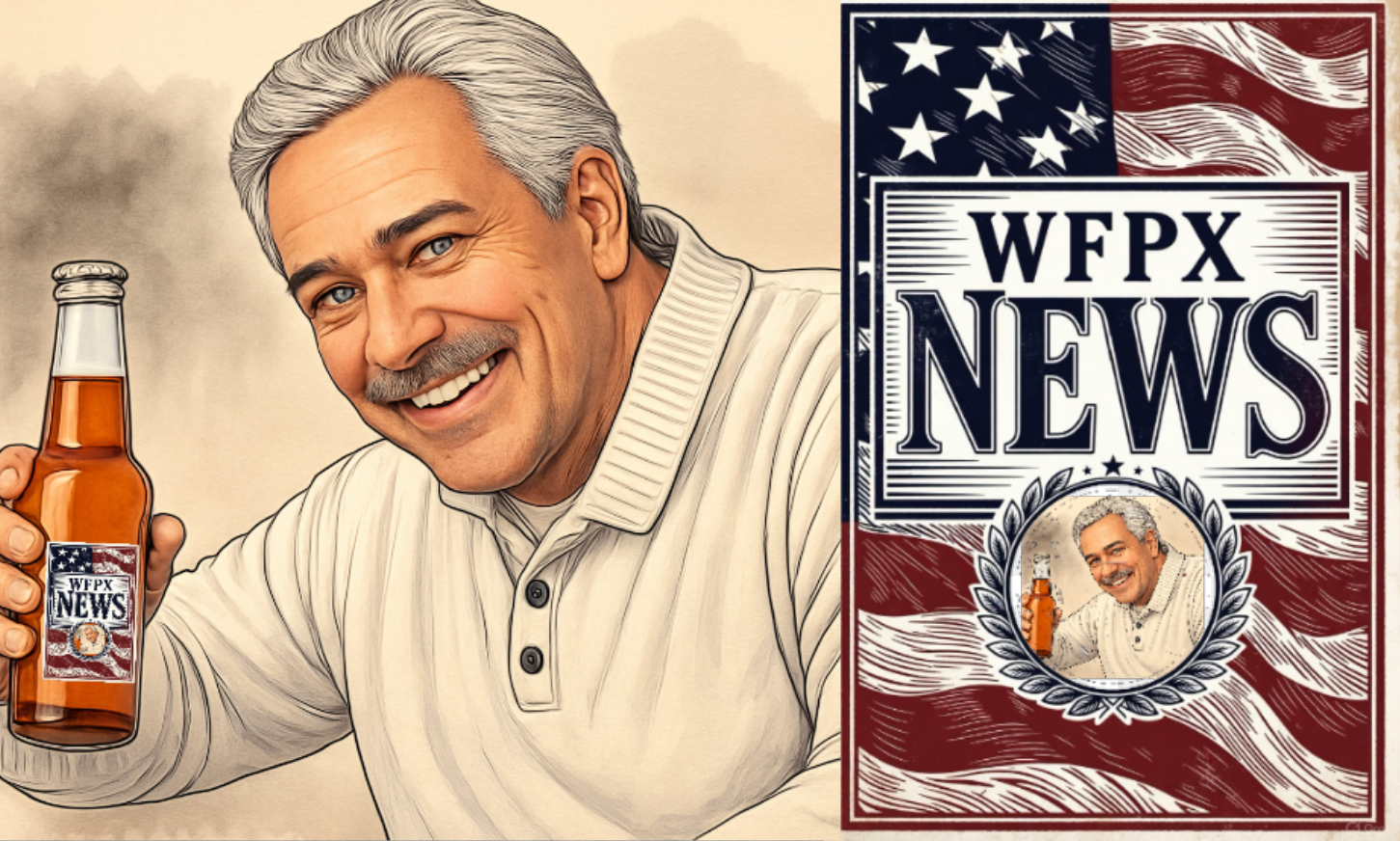
~Michael T. Ruhlman
In the memorable episode “The Stratego Gambit” from Star Trek: The Next Generation, Commander Data faces Colonel Thaddeus Vance Hargrove, Earth’s most celebrated Stratego master. Data initially loses eleven consecutive matches. The defeats are not the result of inferior intelligence. Data’s computational ability far exceeds that of any human opponent. Instead, the losses stem from a more subtle flaw: Data assumes the game is governed by perfect logic and predictable patterns. Hargrove understands that Stratego is not about perfect calculation. It is about uncertainty, deception, and surprise.
By the end of the episode, Data learns a crucial lesson. He stops trying to play the game in the way Hargrove expects. Instead, he deliberately makes a move that contradicts his own predictable logic. The move surprises Hargrove—so much so that the grandmaster pauses and smiles. After forty years of mastering the game, he has finally witnessed something new. Extending his hand to Data, he offers the highest compliment a strategist can give another: “Surprise.”
That moment captures the essence of asymmetric leadership.
The greatest strategists do not simply defeat their opponents on familiar terrain. They refuse to play the opponent’s game altogether.
This idea offers a useful lens for understanding the political style of Donald Trump. Throughout his political career, Trump has often ignored the established rules and expectations of traditional diplomacy and political negotiation. Critics frequently interpret this as chaos or impulsiveness. Yet supporters argue that this very unpredictability is part of a deliberate strategy: refusing to operate inside frameworks designed by others.
Traditional political systems operate much like chess. Every move follows a recognizable pattern. Policy positions are announced in advance, diplomatic signals are carefully calibrated, and negotiations follow predictable procedures. In this environment, seasoned bureaucracies and long-standing institutions hold a natural advantage. They know the rules, they understand the process, and they control much of the information.
Trump’s approach frequently disrupts this structure. Sudden tariff announcements, unconventional negotiating tactics, public pressure on allies, and unexpected diplomatic gestures often break with the predictable rhythms of traditional statecraft. Whether one views these actions positively or negatively, they share a common characteristic: they introduce uncertainty into systems that typically rely on predictability.
In strategic terms, this resembles the moment when Data finally understands Stratego. Success does not always come from perfect analysis within the existing system. Sometimes it comes from stepping outside the system entirely.
When a leader refuses to follow expected patterns, opponents lose the ability to forecast future moves. Policy planners who depend on stable assumptions suddenly find themselves operating in a fog of uncertainty. Decisions that once seemed straightforward become difficult to anticipate.
This does not guarantee success. Strategic ambiguity carries real risks. Uncertainty can unsettle allies as well as adversaries, and unpredictability can escalate tensions if misread. Yet throughout history, leaders who introduced unexpected strategies have occasionally reshaped entire geopolitical environments.
The essential point is not whether one agrees with every policy decision. The strategic concept itself is what matters: the refusal to accept the opponent’s rules as fixed.
That principle lies at the heart of the Stratego lesson Data learns from Colonel Hargrove. Strategy is not only about intelligence or calculation. It is also about understanding the psychology of the game itself.
In Stratego, the strongest piece—the Marshal—can be defeated by the weakest piece, the Spy, if the Spy approaches unnoticed. The board is filled with hidden pieces, misdirection, and incomplete information. Victory does not come simply from having the strongest forces. It comes from controlling the fog of uncertainty.
Viewed through that lens, what appears chaotic from the outside may actually be a form of strategic ambiguity. And in a world where global politics increasingly resembles a multi-layered game of hidden information, the leader who understands how to navigate that fog may possess an advantage that traditional models struggle to explain.
Sometimes the most powerful move is not the one that wins the current position. Sometimes the most powerful move is the one your opponent never expected you to make.
Reference: “The Stratego Gambit” — Star Trek: The Next Generation, Season 6, Episode 14 (Episode 140), Original Air Date: January 25, 1993